SepticRooter™
Metro Atlanta & North Georgia Septic Experts
 (678) 744-7878
(678) 744-7878
(678) 744-7878
If multiple drains are slow or backing up at the same time, the problem isn't a clogged pipe. It's your septic system — and pumping the tank probably won't fix it.
(678) 744-7878
 The Key Distinction: One Drain vs. Multiple
One slow shower drain is almost always a clog in that drain's trap or line — hair, grease, or debris. This is a plumbing issue, not a septic issue. Use a plumber's snake or call a plumber.
When multiple fixtures are slow or backed up simultaneously, the problem is almost always downstream of the individual drain lines — a main-line blockage or a septic system issue. A plumber can rule out a main-line clog; if that’s clear, you need a septic contractor.
Backups typically appear first in the lowest drain in the house — a basement toilet, a floor drain, or a first-floor tub. If you're seeing sewage in the lowest fixtures, your system is in active hydraulic failure.
Gurgling or bubbling from drains, especially when you flush a toilet or run a washing machine, means air is being pushed back through the drain lines by a blockage downstream. It's an early warning sign that backup is coming.
What's Actually Causing ItThe distribution box (D-box) splits effluent evenly across the drain field laterals. When it cracks, settles, or gets clogged with solids, one lateral floods while others starve — and backups follow quickly. D-box repair is often a straightforward fix.
When the drain field soil can no longer absorb effluent — from biomat buildup, soil compaction, or age — effluent has nowhere to go. It backs up through the system into the house. This is the most serious scenario.
The outlet baffle inside the tank prevents solids from escaping into the drain field. When it breaks, solids flood the drain field and clog the laterals within months. The backup feels sudden but the damage built up over time.
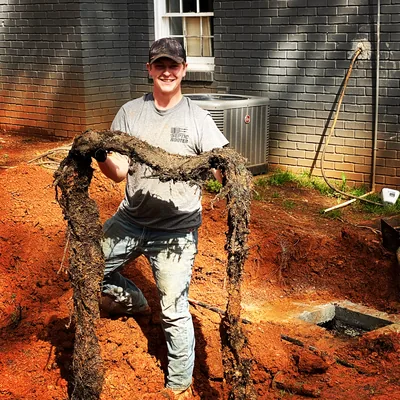
Tree and shrub roots seek moisture and will infiltrate septic pipes, baffles, and distribution boxes. Root intrusion causes partial blockages that worsen slowly, then fail suddenly.
In unusually cold Georgia winters, shallow septic lines can freeze — particularly if the ground is dry and lacks snow cover. Backups from frozen lines are sudden and often clear when temperatures rise, but warrant inspection.
A completely full tank combined with a week of high usage — guests, parties, extra laundry — can cause temporary backups even in a healthy system. This is the one case where pumping actually helps. But it's far less common than homeowners assume.
Why Pumping Might Not Fix ItIf the cause of your backup is anything other than a genuinely full tank — and most of the time it isn't — pumping will give you a few days of temporary relief. The tank empties, the backup clears, and you think the problem is solved.
Two weeks later, the backup returns. You call the pump truck again. This cycle can go on for months while the real problem — a failing drain field, a broken baffle, a clogged D-box — gets progressively worse and more expensive to fix.
The correct sequence is: diagnose first, then decide whether to pump. A proper diagnosis takes about an hour and costs nothing with SepticRooter's free diagnostic visit. It will tell you exactly what's wrong and what needs to happen.
What SepticRooter ChecksWe pull the as-built map from your county health department before we touch anything. It shows us tank size, drain field location, and any previous service history.
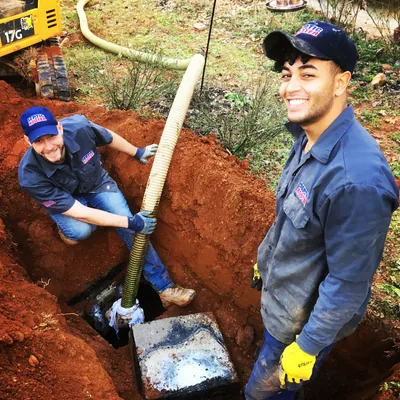
We excavate and open the tank. We check the liquid level (high levels indicate downstream blockage), baffle condition, and scum layer. This tells us immediately if the problem is in the tank or downstream of it.
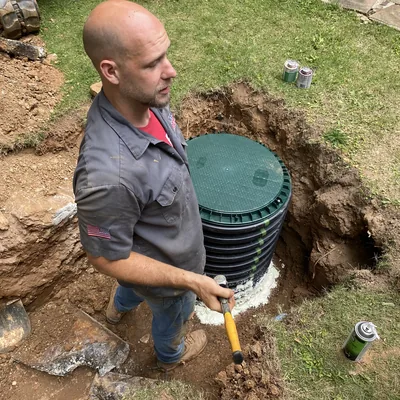
We locate and open the D-box. A cracked, settled, or clogged D-box is one of the most common — and most fixable — causes of system-wide backups.
We probe the laterals and look for saturation, surfacing, or uneven distribution. This tells us whether the field needs repair, rehabilitation, or replacement.
We tell you what we found, what needs to happen, and what it costs — before any work begins. No surprises.
Good To Know




 More Homeowner Guides
Real answers to the questions Georgia homeowners ask most often.
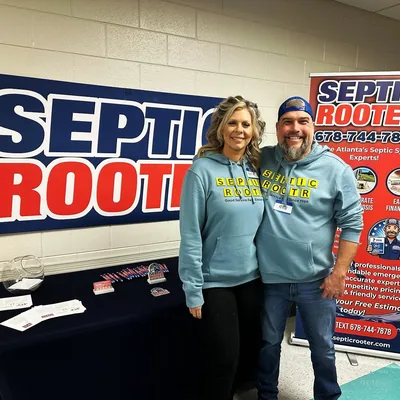
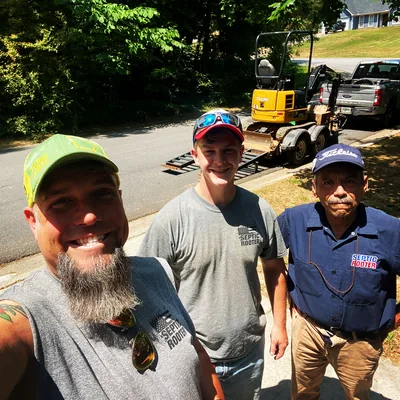
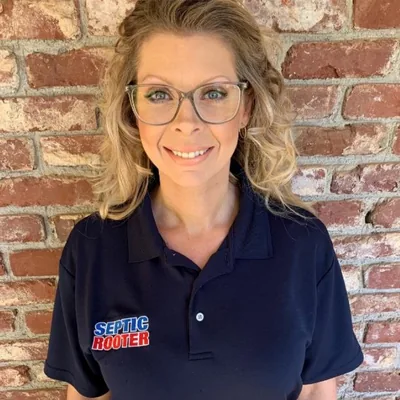
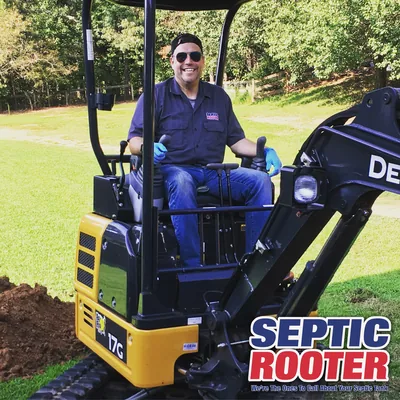
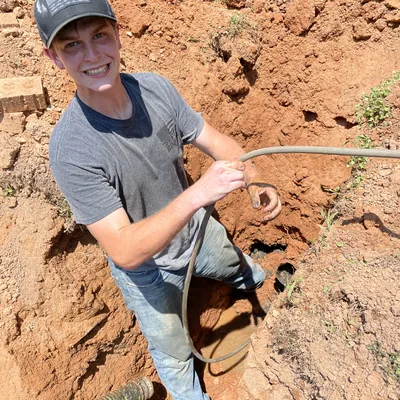
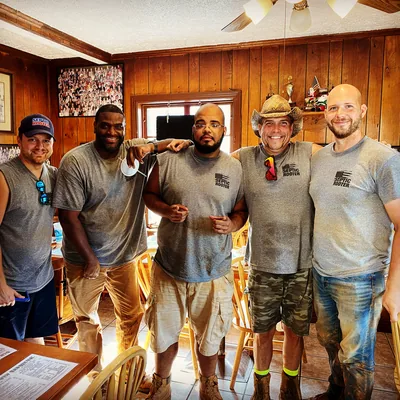
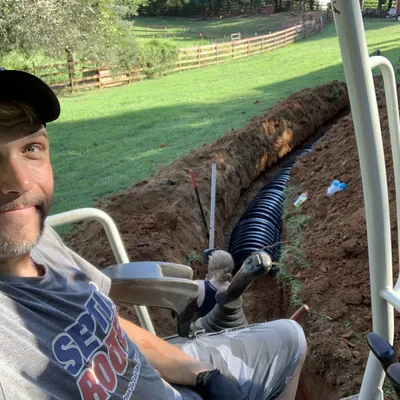
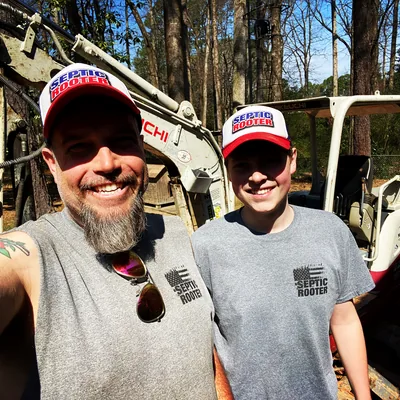
The SepticRooter Family & Crew
















Describe your situation and we'll point you in the right direction — no pressure, no runaround.
(678) 744-7878