
SepticRooter™
Metro Atlanta & North Georgia Septic Experts
 (678) 744-7878
(678) 744-7878
(678) 744-7878
Technically yes — it happens all the time. But it creates serious problems for service access, gas safety, and property value. Here's what to know if yours is buried under a structure.
(678) 744-7878
 How This Happens
A septic tank under a deck or patio almost always got there the same way: the tank was installed first, the structure was built later without proper attention to setbacks, or a previous owner added a deck without knowing or caring where the tank was.
Georgia's septic setback regulations require minimum distances between tanks and structures — but older installations predate some of these rules, and additions and improvements sometimes happen without permits.
The result is a tank that functions fine underground but is now inaccessible for routine service without moving or cutting through the structure above it.
Why It's a ProblemRoutine pumping requires access to the tank lids. If a deck or concrete patio is covering them, service requires either cutting through the structure or building an access point through it. Neither is cheap. Many pump trucks will simply decline the job.
Septic tanks produce methane and hydrogen sulfide. Under normal conditions, these vent safely through the plumbing stack. But any gas leak from a lid, seam, or damaged riser beneath a covered structure has nowhere to dissipate — it can accumulate in crawlspaces or under decks.
A pre-sale septic inspection can't be completed properly if the tank isn't accessible. Inspectors who can't reach the tank will note it in their report — a red flag for buyers that can stall or kill a deal.
A tank under a structure should be disclosed as an access issue. Buyers will price in the cost of creating proper access — either through the structure or by having a riser extended to grade-level beside it.
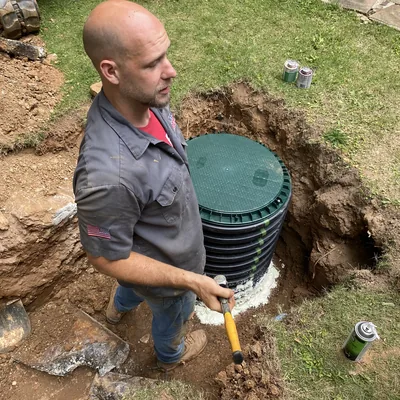
What You Can Do About ItThe most common solution. A concrete or plastic riser extension is installed from the tank lid up to grade level, with a removable lid at the surface. If the tank is under a deck, the riser can often be routed to an accessible point beside the deck. Access problem solved without removing the deck.
When risers aren't feasible — concrete slabs, for example — a service hatch can sometimes be cut through the deck or patio above the lid location. This is more complex but avoids full removal.
In situations where the entire tank footprint is buried under a large patio or addition with no riser option, the structure may need to be partially removed to restore access. This is the most disruptive and expensive option.
If you're selling and the tank is under a structure, get a riser installed and documented before listing. The $500–$1,500 riser installation is far cheaper than losing a deal or negotiating a large credit.
Good To Know




 More Homeowner Guides
Real answers to the questions Georgia homeowners ask most often.
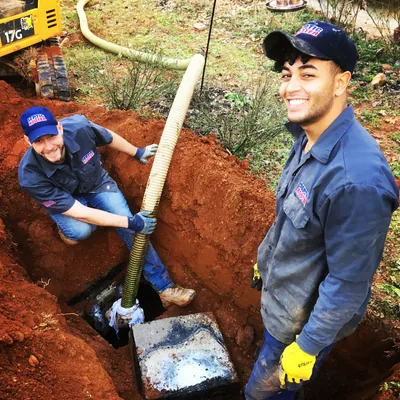
The SepticRooter Family & Crew























Describe your situation and we'll point you in the right direction — no pressure, no runaround.
(678) 744-7878