BBB A+ Rated Since 1989 · Licensed & Insured · Metro Atlanta & North Georgia CALL (678) 744-7878
💰 Homeowner Guide · Replacement Cost

HOW MUCH DOES SEPTIC
REPLACEMENT COST IN GEORGIA?

Most homeowners get a wildly different number from every contractor they call. Here's why — and what actually determines the price of your specific project.

(678) 744-7878

The Real Numbers

WHAT SEPTIC REPLACEMENT COSTS IN GEORGIA

🏠

Full System Replacement (Tank + Drain Field)

Most residential full system replacements in Metro Atlanta and North Georgia run $10,000–$25,000. The median project is around $14,000–$18,000. Wide range because site conditions vary dramatically.

🪣

Tank-Only Replacement

If your drain field is still healthy and only the tank needs replacing, the range is typically $4,000–$8,000. This is far less disruptive — no field excavation required.

🌱

Drain Field Replacement Only

A field replacement without tank replacement typically runs $8,000–$18,000. The range reflects lot access, field size, and whether existing laterals can be reused.

⚙️

Alternative System (Eljen, Aerobic, Mound)

When conventional systems won't work — poor soil, high water table, small lot — an engineered alternative system runs $18,000–$40,000+. These are more complex to design and install but make otherwise-unusable sites work.

🔧

Targeted Drain Field Repair

Not all field problems require full replacement. Localized failure, a single bad lateral, or a clogged distribution box can sometimes be repaired for $1,500–$5,000. Always get a diagnosis before assuming you need full replacement.

Want a real number for your property?
Licensed experts · No obligation · Fast response
(678) 744-7878
What Drives the Price

WHY TWO PROPERTIES IN THE SAME COUNTY GET DIFFERENT QUOTES

🧪

Soil Type and Perc Rate

Georgia's red clay doesn't drain like sandy soil. Tight clay means you need more drain field square footage or an alternative system. Perc tests establish your site's absorption rate and directly determine field size.

📐

Lot Size and Setback Requirements

Georgia requires minimum setbacks from wells, property lines, structures, and waterways. A small lot with a well can limit where a new field can go — sometimes requiring a more expensive system type.

🏗️

Site Access and Topography

A flat, open backyard is cheap to excavate. A steeply sloped lot with mature trees, a pool, or a septic system that's hard to reach adds significant equipment and time costs.

📋

Permitting and Engineering

All septic replacements in Georgia require county health department permits, and alternative systems require engineered drawings. Permit fees range from a few hundred to over $1,000 depending on the county.

🔍

System Type Required

The cheapest replacement — conventional gravity system — only works on sites that perc adequately. Sites that fail the perc test require pressure-dosed or alternative systems that cost significantly more.

⏱️

How Long Since the Last Service

A system that's been neglected — no pumping, deferred repairs — often has more collateral damage. A broken baffle that ran for years may mean the field is also compromised. Catching problems early reduces scope.

What the Process Looks Like

FROM FIRST CALL TO COUNTY INSPECTION

1️⃣

Free On-Site Assessment

We come to your property, assess the system, and determine what actually needs replacing. We won't recommend full replacement if a repair will solve the problem.

2️⃣

Soil Testing and Site Design

If the field needs replacing, we perform perc testing (or review existing test results) and design the replacement system for your specific site conditions.

3️⃣

Permit Application

We file all permit applications with your county health department and manage the approval process. You don't make a single trip to any county office.

4️⃣

Installation

Our licensed crew handles full excavation, installation, and restoration. Most residential replacements take 1–3 days of on-site work once permits are issued.

5️⃣

County Inspection — Guaranteed

We schedule the required county inspection and guarantee it passes on the first try. You get full documentation.

COMMON QUESTIONS

Why does one contractor quote $10,000 and another quote $25,000 for the same job?
Usually because one hasn't fully assessed the site. A quote without soil testing, setback calculations, and a proper field evaluation is a guess. Get quotes that include an on-site visit and specify exactly what's included.
Does homeowners insurance cover septic replacement?
It depends on your policy and the cause of failure. Sudden, accidental failures are more often covered than gradual deterioration. Call your insurance agent and ask specifically about septic system coverage. We can provide full documentation for claims.
How long does a new septic system last in Georgia?
A properly installed and maintained concrete tank lasts 25–40 years. A conventional drain field lasts 20–30 years with proper care — pumping every 3–5 years and keeping traffic off the field. Most premature failures trace to a neglected tank that sent solids into the field.
Can I finance a septic replacement?
Some contractors offer financing directly. Additionally, USDA Rural Development offers home repair loans and grants for qualifying rural homeowners, and some Georgia counties have assistance programs for failing systems near waterways. Ask when you call.
35+ Years
Serving Metro Atlanta
GA Licensed
State Certified
BBB A+
BBB A+ Rated
Accredited Since 1989
NAWT Certified
Industry Certified
Fully Insured
You are protected
Eljen Certified
Alternative Systems
More Homeowner Guides

MORE ANSWERS FROM THE FIELD

Real answers to the questions Georgia homeowners ask most often.

→ Why Is My Septic Alarm Going Off?→ Why Does My Yard Smell Like Sewage?→ Why Are My Drains Backing Up?→ Should I Pump My Septic Tank or Get It Repaired?→ What Are the Signs of a Failed Drain Field?→ Who Pays for a Failed Septic System During a Home Sale?→ Can a Septic Tank Be Under a Deck or Patio?→ How Much Does Septic System Replacement Cost in Roswell, GA?→ How Much Does Septic System Replacement Cost in Marietta, GA?

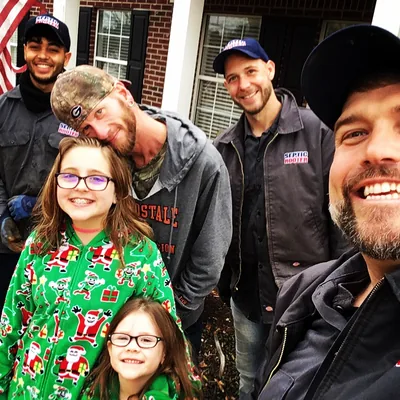
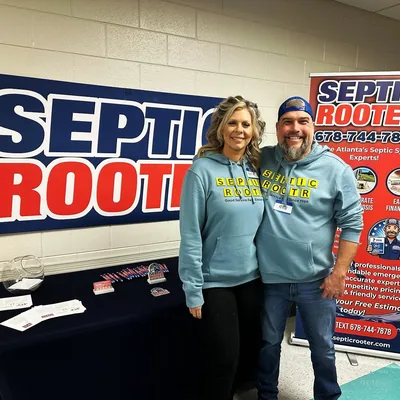
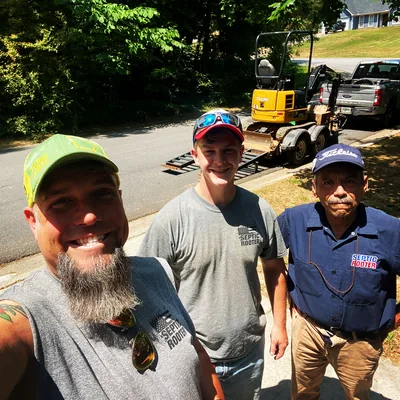
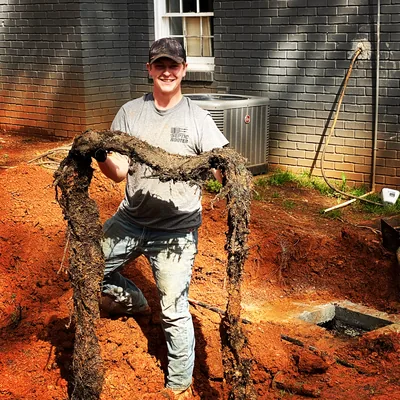
The SepticRooter Family & Crew
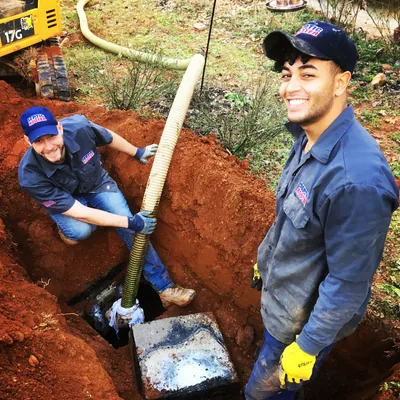
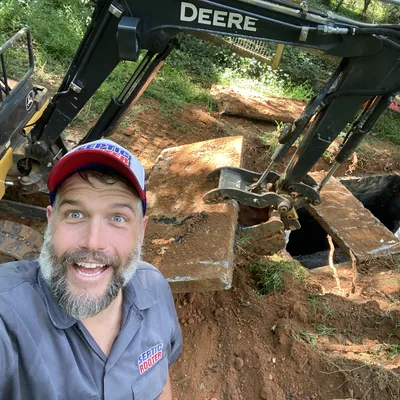
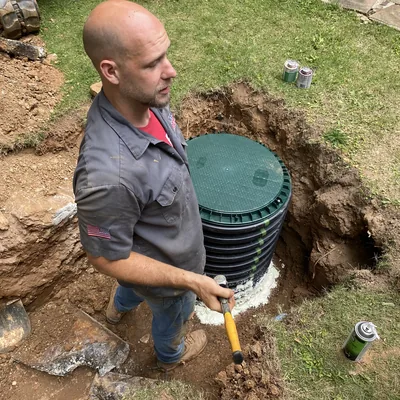
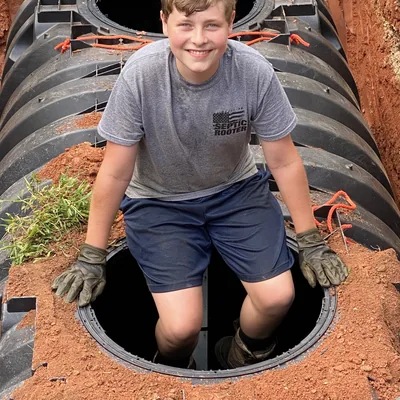
The SepticRooter teamRob and Beth at a SepticRooter trade show boothSepticRooter crew on a jobRob and his son by the truckBeth Simmons, SepticRooterRob on a tough repairRob at the controlsRob and Beth at Harry Norman RealtorsCrew digging inRob at the tank lidSepticRooter tech with a failed pipe pulled from a repairRob inside the tankRob at a job siteRob and Beth at Mark Spain Real EstateRob Simmons on Fox 5 AtlantaRob on the excavatorSepticRooter tech holding a failed outlet baffleRob and his son by the vanTeam on the jobRob and Beth at a SepticRooter eventRob and son after the jobTwo happy techniciansFull crew on siteRob selfie in the trenchTeam by the truckRob waving from the trenchTeam photo indoorsRob with the pipesRob in the pitRob selfie with equipmentRob after the jobThe SepticRooter teamRob and Beth at a SepticRooter trade show boothSepticRooter crew on a jobRob and his son by the truckBeth Simmons, SepticRooterRob on a tough repairRob at the controlsRob and Beth at Harry Norman RealtorsCrew digging inRob at the tank lidSepticRooter tech with a failed pipe pulled from a repairRob inside the tankRob at a job siteRob and Beth at Mark Spain Real EstateRob Simmons on Fox 5 AtlantaRob on the excavatorSepticRooter tech holding a failed outlet baffleRob and his son by the vanTeam on the jobRob and Beth at a SepticRooter eventRob and son after the jobTwo happy techniciansFull crew on siteRob selfie in the trenchTeam by the truckRob waving from the trenchTeam photo indoorsRob with the pipesRob in the pitRob selfie with equipmentRob after the job